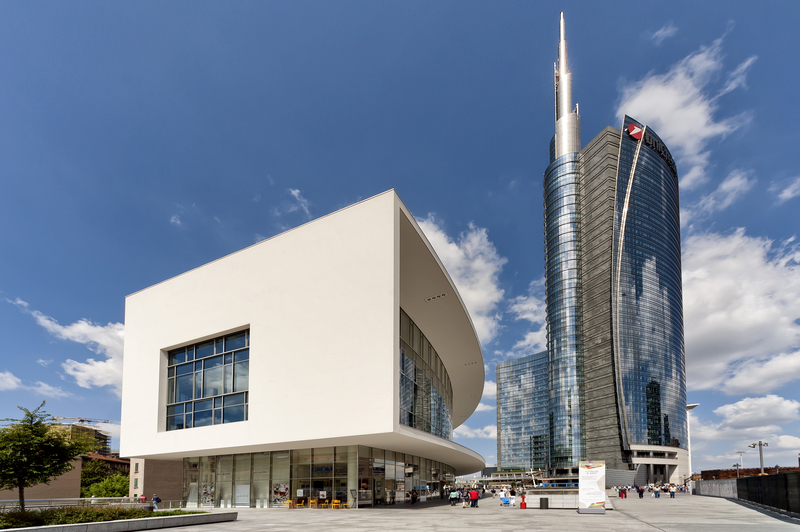
UniCredit Bank often grabs headlines as a major force in European finance. But what lies behind the brand? Whether you're curious about who owns UniCredit, how it grew into a continental powerhouse, or what challenges it faces next, this guide delivers all the details you need. By exploring UniCredit’s history, finances, and community engagement, you’ll get a comprehensive look at what makes this institution vital to the banking landscape.
Introduction to UniCredit Bank
UniCredit Bank is far from just another European bank. Headquartered in Milan, Italy, UniCredit stands as a pivotal figure in international finance, with a sprawling presence across more than a dozen countries. It serves individuals, small and medium-sized businesses, and large corporations, offering everything from traditional banking to advanced financial solutions. This post unpacks UniCredit’s story—from its origins and stakeholders to its financial muscle and social commitments.
History and Evolution
Early Foundations
UniCredit’s roots trace back to Italy’s postwar era. Through a series of mergers among numerous regional banks, the organization steadily gained scale and worked toward more unified management. The real game-changer arrived in 1998, when Credito Italiano and Unicredito formed one of Italy’s strongest banking networks. This early consolidation laid the groundwork for UniCredit’s rapid expansion.Background of the 2 Banks that led to the formation of UniCredit
Credito Italiano and Unicredito, though distinct entities with their own rich histories, eventually merged to create one of Europe's largest banking groups. Their journey from separate regional banks to a unified international powerhouse reflects the broader transformation of European finance. Understanding this evolution offers valuable insights into how traditional banking adapted to globalization, technological advancement, and changing customer needs throughout the 20th and early 21st centuries.
1) Founding and Early Years of Credito Italiana
Credito Italiano was established in 1870 in Genoa, emerging during Italy's post-unification economic boom. The bank was founded with the specific mission of supporting Italian industrial development, particularly in the northern regions where manufacturing was rapidly expanding. From its inception, Credito Italiano distinguished itself by focusing on medium and long-term credit for industrial enterprises. This approach proved prescient as Italy entered its period of rapid industrialization. The bank quickly established branches in major commercial centers including Milan, Turin, and Rome, positioning itself as a key financier of Italy's growing economy. The early decades saw Credito Italiano play a crucial role in financing infrastructure projects, textile mills, and steel production facilities. By the turn of the 20th century, it had become one of Italy's most important financial institutions.
Key Developments and Expansion
Throughout the early 1900s, Credito Italiano expanded its operations both domestically and internationally. The bank weathered significant challenges including two world wars and the Great Depression, adapting its strategies to survive economic turbulence. The post-World War II era marked a period of substantial growth. As Italy experienced its economic miracle, Credito Italiano expanded its retail banking operations while maintaining its strong corporate and industrial lending focus. The bank opened numerous branches across Italy and began offering more diverse financial services to meet evolving customer demands. During the 1970s and 1980s, Credito Italiano modernized its operations, investing heavily in technology and developing new financial products. This period of innovation helped the bank maintain its competitive position as Italian banking became increasingly competitive.
2) The Emergence of Unicredito
Unicredito emerged from a different trajectory, formed through the merger of several smaller Italian banks in the 1990s. This consolidation reflected broader trends in European banking, where smaller institutions combined forces to compete more effectively in an increasingly integrated market. The creation of Unicredito represented a new approach to Italian banking, emphasizing efficiency, technology, and customer service. Unlike the traditional industrial focus of Credito Italiano, Unicredito positioned itself as a modern retail and commercial bank serving diverse market segments. Unicredito's growth strategy involved both organic expansion and strategic acquisitions. The bank quickly established itself as a major player in Italian retail banking while building capabilities in investment banking and asset management.
Merger and Formation of UniCredit
The merger of Credito Italiano and Unicredito in 1998 created UniCredit, marking a watershed moment in Italian banking history. This combination brought together Credito Italiano's century-plus of experience and established corporate relationships with Unicredito's modern banking platform and retail expertise. The newly formed UniCredit became Italy's largest bank by assets and market capitalization. More importantly, the merger created an institution with the scale and resources necessary to compete in the European single market. UniCredit quickly expanded beyond Italy's borders, acquiring banks in Germany, Austria, and Eastern Europe. This expansion strategy transformed UniCredit from a primarily Italian institution into one of Europe's leading cross-border banks. The bank's geographic diversification provided both growth opportunities and risk mitigation as it operated across multiple markets with varying economic cycles.
Expansion and IPO
UniCredit’s initial public offering (IPO) occurred in 1998, coinciding with broader European market reforms. The bank listed on the Borsa Italiana (the Italian stock exchange), opening itself up to both retail and institutional investors across Europe. This strategic move attracted capital, strengthened its governance, and fueled further growth. The early 2000s saw UniCredit focusing on Central and Eastern Europe, acquiring stakes in banks like Bank Austria and HVB Group. These bold plays diversified UniCredit’s income streams and laid the foundation for its modern, multi-national structure.Key Stakeholders
Since going public, UniCredit’s ownership base has become widely dispersed. Major global investors, institutional funds, and individual shareholders all have stakes. Italian national and regional governments were once prominent backers, but today’s ownership reflects a mix of domestic and international capital. The board and executive leadership steer the institution’s daily management, with oversight from regulatory authorities in Italy and the EU.Who Owns UniCredit
Understanding who controls such a vast enterprise is essential. Unlike some banks with a clear majority owner, UniCredit operates with a wide shareholding structure. Its largest shareholders include investment funds, European financial institutions, and thousands of retail investors. Notable names from recent filings have included BlackRock, Capital Research and Management, and other leading asset managers.
Ownership can shift as shares are traded daily, but no single group maintains more than a minor percentage. This broad-based ownership ensures that UniCredit’s management is accountable to diverse interests and must balance value creation with risk management.
Ownership can shift as shares are traded daily, but no single group maintains more than a minor percentage. This broad-based ownership ensures that UniCredit’s management is accountable to diverse interests and must balance value creation with risk management.
Review of Assets Under Management and Financials
Assets Under Management (AUM) and Total Assets
UniCredit manages considerable financial resources. Its assets under management (AUM)—which reflect investments managed on behalf of clients—run into the hundreds of billions of euros. Meanwhile, its total assets, which also include loans, deposits, and proprietary holdings, surpass one trillion euros. Such a scale puts UniCredit among the giants of European banking.Revenue and Profitability
UniCredit’s financial statements consistently point to its strength. Annual revenues have recently exceeded 20 billion euros, with net profits reaching into the multi-billions. The bank’s diversified business model, featuring both retail and corporate divisions, offers resilience against shifting economic cycles.Capital Ratios and Financial Health
Regulatory capital ratios, like the Common Equity Tier 1 (CET1), are a key metric for bank stability. UniCredit has met or exceeded all EU banking requirements in this area for several years straight, reflecting its prudent risk management and forward-looking strategy.
Services Offered
UniCredit Bank serves a vast customer base with a range of services that goes far beyond basic checking accounts:
-
Retail Banking
Personal accounts, credit cards, personal loans, mortgages, and investment advice for individuals and families. - Corporate and SME Services
Financing, cash management, trade finance, and specialized consulting for small businesses and major corporations alike. - Private Banking and Wealth Management
Tailored investment strategies, succession planning, and dedicated advisory services to high-net-worth individuals. - Digital Banking
Secure, user-friendly digital offerings allow customers to manage their finances on any device. Innovation in fintech partnerships has brought easy payment solutions and advanced digital tools. - Sustainable Finance
UniCredit actively offers green loans, ESG investment products, and support for projects that aid the energy transition.
Community Involvement
UniCredit doesn’t limit its impact to the balance sheets. The bank drives community programs throughout its operating countries. These include:
- Youth employment initiatives to help young people enter the workforce.
- Financial literacy programs tailored for adults and schoolchildren.
- Support for local entrepreneurship in economically challenged areas.
- Charitable giving and disaster relief through the UniCredit Foundation and partner NGOs.
UniCredit’s focus on social development seeks to enhance inclusion, education, and long-term prosperity in its host communities.
Challenges and Future Directions
Navigating Regulatory Shifts
UniCredit faces ongoing challenges from Europe’s complex regulatory landscape. Compliance with banking regulations (including anti-money laundering and transparency standards) is both vital and resource-intensive.Market Volatility and Economic Change
The rise of fintech startups and digital-only banks presents fresh competition. Meanwhile, global macroeconomic shifts—including inflation and geopolitical instability in certain European markets—may impact UniCredit’s growth trajectory.Commitment to Sustainability
Climate change pressures are reshaping the banking sector worldwide. UniCredit is increasingly channeling investments into green financing, renewable energy, and sustainable development, aiming to meet both regulatory requirements and the values of its shareholders.Digital Transformation
Rapid shifts in technology continue to redefine how banks interact with customers and handle security. UniCredit’s investments in advanced digital infrastructure and cybersecurity position it well for a future that is fast, data-driven, and customer-centric.
Where UniCredit Goes from Here
UniCredit Bank is more than a financial institution – it is a key player in the global economy with a strong commitment to innovation, sustainability and customer satisfaction. As UniCredit continues to grow and evolve, it remains dedicated to its core values of integrity, responsibility and excellence.
Looking ahead, UniCredit is focused on expanding its presence in emerging markets, particularly in Asia where there is significant potential for growth. The bank also plans to further enhance its digital capabilities, providing customers with innovative solutions and seamless experiences.
UniCredit’s commitment to sustainability will remain at the forefront of its strategy as it strives to become an industry leader in responsible banking practices. By investing in renewable energy and promoting green financing, the bank is not only meeting regulatory requirements
Looking ahead, UniCredit is focused on expanding its presence in emerging markets, particularly in Asia where there is significant potential for growth. The bank also plans to further enhance its digital capabilities, providing customers with innovative solutions and seamless experiences.
UniCredit’s commitment to sustainability will remain at the forefront of its strategy as it strives to become an industry leader in responsible banking practices. By investing in renewable energy and promoting green financing, the bank is not only meeting regulatory requirements