
War jump-starts the economy and is good for industries like manufacturing and distribution. It creates jobs and increases government spending.
Whether the war is regional, international, or global in its scale, it can have strong implications for the future of society and the economy. Of course, this also includes any stock markets that trade within those regions. To say that war positively or negatively impacts the stock market is oversimplifying a complex issue. This article will discuss the impacts of war on the stock market in a historical and fundamental sense.
How Have Stock Markets Been Impacted by War?
This is particularly true for the US stock market which has shown resilience to wars around the world. Even when the United States is attacked, the recovery is often swift. Take, for example, the 9/11 attacks in 2001. There was a one-day drawdown of about 5.0% in the S&P 500 which admittedly is a big deal. In total, the benchmark index lost 11.6% over the next 11 trading days. Despite this sudden drop, the S&P 500 fully recovered in 31 days.
Historical figures show that the average drop from a war or terrorist attack is only about 1.2% for the S&P 500 and is recovered within the next 47 days. While this does lead to war being a bearish event for equities, it speaks more to investor uncertainty and sentiment than a material impact on the performance and profitability of publicly traded companies.
War and equities have had a mysterious relationship throughout history. Many point to a direct relation to surprise conflicts or attacks having a larger impact on stock markets. The 9/11 attacks are an excellent example of this. When there is a long build-up to a conflict, stocks tend to fall but then rise as the war unfolds.
Wars also tend to have a more negative impact on the stock markets where the war is taking place and on the participants in that war. This is logical and is most apparent during major conflicts like World War I and World War II. The economic impacts of these two great wars were deep as World War I led to the Great Depression and World War II led to a near 30% drop in the US markets. One little-known fact is that during World War I, the New York Stock Exchange was closed for four months. When it finally reopened in 1915 it experienced a high level of volatility.
One thing most of these drops have in common is that the rebound was just as fast and much more furious. The First World War saw the Roaring 20s before the Great Depression hit. Following the Second World War and the Korean War, we saw nearly two decades of strong market performance leading up to the Vietnam War.
Why Can War Impact the Stock Market?

What are the reasons why a war would impact the stock market? Generally speaking, it does not affect how businesses operate. It also shouldn't have any impact on most industries if the war is taking place overseas. Here are some reasons why war can potentially have a brief yet impactful effect on the performance of stocks.
For the most part, investors do not like uncertainty when it comes to the stock market. A lot of people believe that sentiment is what drives the market and not fundamentals or technicals. If investors are bearish, then there will be an increase in selling pressure and if they are bullish, an increase in buying. There is more to it than this but generally, the market is structured around this relationship between supply and demand.
Uncertainty for global events can be a sure way to make investors skittish. What happens when investor sentiment shifts? We see a large movement in the market prices of stocks. Generally, we do not know how serious a war will be until it begins to play out. The instinct for most investors will be to sell the news and wait until the conflict has run its course.
Geopolitical Uncertainty
Another reason why investors may get skittish is the unknown impacts of the war on other regions. Sure, a war in the Middle East might not affect how American businesses operate, but it can have a direct impact on things like the price of oil. Or, if one of the parties is an ally of the United States, then America would potentially have to join the war. Things can get tricky when it comes to geopolitical relations which is a reason why wars can cause market volatility.
Disruption of the Economy
War directly impacts the economies of the region it is taking place in. It can affect business operations, supply chains, and even trade with other countries. In addition to these direct impacts, an invading country can even have economic sanctions placed on them like what happened to Russia when it invaded Ukraine. All of these factors can slow or even bring an economy to a halt which can affect stock markets in the region and around the world.
Impacts on Currencies
Stock investors don’t always think of the effect that currencies have on the markets. During times of conflict, currencies can fluctuate dramatically. When conflicts are international, we often see safe haven currencies like the US Dollar gain strength as investors flock to the global standard. As a result, other currencies will weaken which can affect the profitability of businesses which of course, can have an impact on the price of their stocks.
The Central Bank
Here in the United States, we are tapped into what the Federal Reserve does. But nearly every country in the world has a central bank of their own which will have specific responses to a breakout of war. There can be any number of monetary policies or quantitative easing or tightening to help a country during a war. Historically, war has also been the cause of domestic inflation which could have a direct impact on interest rate cycles. As we are all well aware, interest rates and monetary policies can have a very direct effect on the performance of the stock market.
Energy and Commodities
There are few industries that are more sensitive to geopolitical conflicts than energy and commodities. When you look at things like crude oil, it truly is a global market. Any impact on a region that produces oil or distributes oil can have a direct effect on the price. If the price rises, it can affect everything from the price of gasoline for cars to the cost of construction and industry. Any impact on commodities can cause the price of food and consumer goods to rise as well.
Which Sectors Perform Well During War?
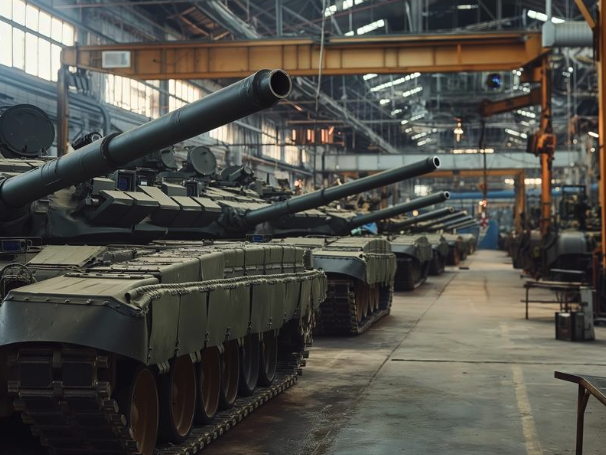
The same can be said for companies that operate in specific energy or commodity industries. Any impact on supply chains or production can cause the price of these to skyrocket. Higher prices for commodities can lead to higher profit margins for the companies that deal with these products.
In times of war or geopolitical tensions, certain sectors and stocks tend to perform better than others, driven by increased demand for their products and services that are essential in such circumstances. Here's an overview of sectors and types of stocks that historically have shown resilience or growth during wartime:
1. Defense and Aerospace
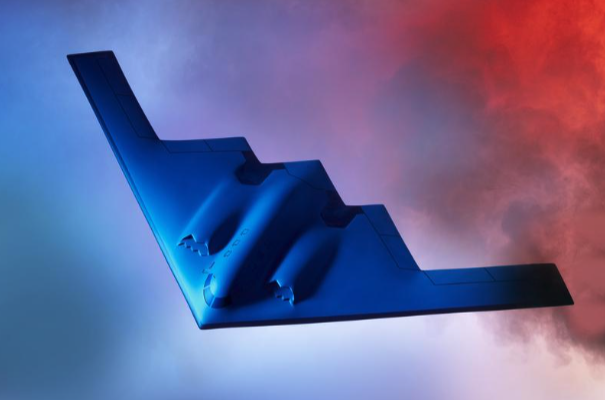
Companies in the defense sector, including manufacturers of military equipment, weapons, aircraft, and naval vessels, often see increased demand during times of conflict. Stocks of companies like Lockheed Martin, Northrop Grumman, Raytheon Technologies, and BAE Systems may experience growth as government defense spending increases.
3. Energy and Oil Historically, geopolitical tensions can lead to disruptions in oil supply chains, driving up oil prices. Companies in the oil and energy sector, including ExxonMobil, Chevron, and BP, might benefit from higher oil prices. Additionally, alternative energy sources can also gain attention as nations seek to diversify their energy dependencies.
4. Precious Metals In times of uncertainty, investors often turn to precious metals like gold and silver as safe havens. This can drive up prices and benefit mining companies and ETFs focused on these commodities, such as Newmont Corporation (gold mining) and iShares Silver Trust (silver).
5. Utilities Utilities tend to be stable investments during volatile periods because they provide essential services that remain in demand regardless of the economic situation. Stocks in water, electricity, and gas companies can offer resilience and consistent dividends.
6. Infrastructure and Construction

Reconstruction efforts post-conflict can lead to increased investment in infrastructure and construction, benefiting companies in these sectors. Caterpillar and other construction machinery and materials firms could see growth opportunities as rebuilding efforts commence.
It's important to note that while these sectors may do well during times of conflict, investing in stocks always carries risks, and war can introduce unpredictable variables that impact markets globally. Therefore, any investment decisions should be made carefully, considering one's risk tolerance, investment horizon, and ethical considerations related to profiting from conflict situations. Diversification and consultation with a financial advisor are prudent steps in managing investment risks.
Conclusion
Conflicts of any nature can lead to a shift in market sentiment and a rise in investor uncertainty. It can also lead to geopolitical unrest which can cause economic instability and impact other markets like energy, commodities, and currencies. Wars tend to favour stock markets that are based in countries that are not involved. Finally, stock markets have a history of seeing a sudden drop due to unexpected military attacks.
While publicly traded companies might not be directly impacted, there are many ways in which the stock price can waver. Once things have settled down, it is common to see stock markets recover and even rise higher than what they were when the conflict started. With war, we can almost always expect market volatility but that does not necessarily translate to poor performance.