
The institution's journey from 19th-century French banking origins to modern global powerhouse reflects broader trends in European finance and international banking. Unlike institutions built from single founding visions, BNP Paribas emerged through strategic mergers that combined centuries of banking expertise with modern global capabilities. The bank's name itself tells this story—BNP (Banque Nationale de Paris) merged with Paribas (Banque de Paris et des Pays-Bas) in 2000 to create today's financial giant.
Understanding BNP Paribas requires examining both its historical foundations and contemporary strategies. The bank's success demonstrates how European institutions can compete effectively with global banking giants while maintaining strong regional roots. From its sophisticated investment banking operations to its extensive retail networks, BNP Paribas has built a diversified business model that generates sustainable returns across economic cycles.
This comprehensive profile explores how BNP Paribas evolved from its constituent banks into a modern financial services leader, examining its business divisions, global presence, financial performance, and strategic positioning within the competitive landscape of international banking.
The Banque Nationale de Paris Legacy
The Banque Nationale de Paris traces its origins to 1848 with the creation of the Comptoir National d'Escompte de Paris, established to address France's banking needs during a period of economic transformation. The institution played crucial roles in financing French industrial development and international trade expansion throughout the 19th and early 20th centuries.
BNP's evolution accelerated through strategic acquisitions and organic growth. The bank developed expertise in commercial banking, international finance, and corporate lending that would become foundational to the modern institution. Its extensive branch network throughout France established strong retail banking capabilities that complemented its commercial operations.
The bank's international expansion began early, with offices established to support French colonial trade and European commerce. This global perspective distinguished BNP from purely domestic competitors and provided valuable experience in managing international banking operations across diverse regulatory environments.
Paribas: Investment Banking Excellence
Paribas, officially known as Banque de Paris et des Pays-Bas, was founded in 1872 through the merger of two prominent financial institutions. The bank quickly established itself as a leader in investment banking, specializing in securities underwriting, corporate finance, and international lending operations.
The institution's investment banking heritage gave it sophisticated capabilities in complex financial transactions and strategic advisory services. Paribas developed strong relationships with European corporations and government entities, providing capital markets expertise and financial advisory services that distinguished it from traditional commercial banks.
Paribas's international network expanded throughout the 20th century, with particular strength in European markets and emerging economies. The bank's expertise in cross-border transactions and international finance provided valuable capabilities that would enhance the merged entity's global competitiveness.
The Merger of 2000: Creating a European Champion
The merger between BNP and Paribas in 2000 represented one of the most significant consolidations in European banking history. The transaction created a financial institution with enhanced scale, diversified capabilities, and strengthened competitive positioning in both domestic and international markets.
The merger strategy focused on combining BNP's retail banking strength with Paribas's investment banking expertise. This approach created a truly universal bank capable of serving diverse client segments with comprehensive financial services. The combined entity possessed the scale and capabilities necessary to compete with global banking giants.
Integration challenges required careful coordination of different corporate cultures, operational systems, and customer relationships. The successful merger demonstrated the potential for European banks to achieve global scale while maintaining their distinct cultural identities and operational strengths.
IPO and Public Ownership
BNP Paribas trades on Euronext Paris and other major exchanges, providing public investors with ownership stakes in Europe's largest bank. The public ownership structure ensures transparency and accountability while enabling access to capital markets for funding growth initiatives.
The bank's stock performance reflects its diversified business model and consistent financial results. Shareholders benefit from the institution's balanced approach to growth investment and dividend payments, supported by strong capital generation and prudent risk management.
Banking Through the World Wars
Supporting France During Global Conflicts
BNP Paribas's predecessor institutions played crucial roles during both World Wars, demonstrating the vital connection between banking and national survival. The Comptoir National d'Escompte de Paris, a key ancestor of BNP, helped finance French government operations during World War I through bond underwriting and currency support.
During World War II, French banks faced unprecedented challenges as the country split between occupied and free zones. Banking operations continued under extremely difficult circumstances, with institutions maintaining essential financial services while navigating complex political pressures. The banks' ability to preserve capital and maintain operations during wartime proved essential for post-war reconstruction.
These wartime experiences shaped the banks' understanding of systemic risk and the importance of maintaining strong capital positions. The lessons learned about operating under extreme stress influenced their conservative approach to risk management that continues today.
Post-War Reconstruction and Growth
The post-war period brought massive reconstruction needs that required substantial financing. BNP Paribas's predecessor banks participated extensively in rebuilding French industry and infrastructure, establishing relationships with major corporations that would prove valuable for decades.
This reconstruction financing experience developed the banks' expertise in project finance and large-scale lending operations. The skills acquired during this period became foundational to their later success in international markets and complex transaction structuring.
International Expansion and Subsidiaries
Building a Global Network
BNP Paribas operates through numerous international subsidiaries that provide localized banking services while maintaining global coordination. Major subsidiaries include Bank of the West in the United States (sold in 2022, more on this below), BNP Paribas Fortis in Belgium, and Banca Nazionale del Lavoro in Italy.
The bank's international structure reflects a strategy of maintaining local market presence while leveraging global capabilities. Each subsidiary operates under local regulations while benefiting from the parent company's capital strength and expertise.
Key international subsidiaries serve specific market segments and geographic regions:
- BNP Paribas USA: Focuses on corporate banking and capital markets
- BNP Paribas Personal Finance: Provides consumer lending across Europe
- BNP Paribas Securities Services: Offers custody and asset servicing globally
- BNP Paribas Real Estate: Handles property investment and development
Strategic Market Positioning
The bank's international subsidiaries enable it to serve multinational corporations with comprehensive banking services across multiple jurisdictions. This global network provides competitive advantages in trade finance, cash management, and cross-border transactions.
Each subsidiary maintains strong local relationships while contributing to the bank's overall international strategy. The combination of local expertise and global capabilities creates value for clients requiring sophisticated international banking solutions.
The French-Canadian Banking Connection
Historical Ties and Modern Partnerships
BNP Paribas maintains significant connections with Canadian banking through historical relationships and modern strategic partnerships. The bank's presence in Canada reflects broader French-Canadian cultural and economic ties that extend beyond banking.
The relationship includes correspondent banking arrangements, joint venture partnerships, and collaboration on international transactions. These connections enable both French and Canadian institutions to serve clients requiring transatlantic banking services.
BNP Paribas's expertise in international banking complements Canadian banks' North American focus, creating opportunities for cooperation in global markets. The partnership demonstrates how international banking relationships can provide mutual benefits through shared expertise and market access.
Cross-Border Transaction Facilitation
The French-Canadian banking relationship facilitates trade finance and investment flows between Europe and North America. BNP Paribas's global network provides Canadian businesses with access to European markets while supporting French companies' North American expansion.
This relationship has evolved to include specialized services for companies operating in both markets, including foreign exchange, hedging, and international cash management. The banks' cooperation reflects the importance of international partnerships in serving global business needs.

Recent Strategic Transactions
The Bank of the West Sale to BMO : Countries involved - US, France and Canada
In 2022, BNP Paribas completed one of the most significant recent transactions in North American banking by selling Bank of the West to Bank of Montreal (BMO) for $16.3 billion. This transaction reflected the bank's strategic decision to focus resources on markets where it can achieve stronger competitive positions.
The sale allowed BNP Paribas to exit the highly competitive US retail banking market while maintaining its corporate and investment banking operations. The transaction demonstrated the bank's willingness to make difficult strategic decisions to optimize its global portfolio.
Proceeds from the sale strengthened BNP Paribas's capital position and provided resources for investment in higher-growth markets. The transaction illustrated how strategic portfolio management can create value for shareholders while enabling focused investment in core competencies.
Business Divisions: A Comprehensive Banking Platform
Retail Banking Excellence
BNP Paribas operates extensive retail banking networks across Europe and internationally, serving millions of individual customers through traditional branches and digital platforms. The bank's retail operations focus on comprehensive customer relationships, offering deposits, loans, credit cards, insurance, and investment products.
The retail banking strategy emphasizes customer experience and digital innovation. Significant investments in mobile banking technology and digital services have enhanced customer convenience while improving operational efficiency. The bank's wealth management services cater to affluent customers seeking sophisticated investment solutions.
Retail banking operations provide stable funding sources through customer deposits and generate consistent fee income through various products and services. This business segment's predictable revenue streams complement the bank's more volatile investment banking operations.
Corporate and Institutional Banking Leadership
BNP Paribas's corporate and institutional banking division serves large corporations, financial institutions, and government entities across global markets. The bank provides comprehensive financial services including lending, cash management, trade finance, and treasury operations.
Industry expertise spans multiple sectors with particular strength in energy, infrastructure, technology, and healthcare. This specialized knowledge enables BNP Paribas to provide tailored solutions for complex financial transactions and strategic initiatives. The bank's reputation for excellence in project finance and structured lending attracts clients requiring sophisticated financial solutions.
The corporate banking relationships generate multiple revenue streams through lending, fee-based services, and cross-selling opportunities. Long-term client relationships provide stability and enable the bank to anticipate customer needs and develop innovative solutions.
Investment Banking and Capital Markets
BNP Paribas operates one of Europe's leading investment banking platforms, providing securities underwriting, mergers and acquisitions advisory, and capital markets services. The bank's investment banking capabilities compete effectively with global investment banking leaders.
Trading operations encompass fixed income, equity, and commodity markets with sophisticated risk management and technology systems. The bank's market-making activities provide liquidity to institutional clients while generating trading revenues across various asset classes.
The investment banking division's performance varies with market conditions, but its diversified operations and strong client relationships provide resilience during challenging periods. The bank's European market leadership position enables it to participate in major transactions and maintain market share.
Investment and Protection Services
BNP Paribas offers comprehensive investment and protection services through its asset management and insurance operations. These services serve institutional clients, high-net-worth individuals, and retail customers seeking sophisticated investment solutions.
Asset management operations manage substantial assets for pension funds, insurance companies, and other institutional investors. The bank's investment expertise and risk management capabilities have attracted significant assets under management, generating stable fee income and strengthening client relationships.
Insurance operations provide life, property, and specialty insurance products through various distribution channels. The insurance business complements the bank's other operations by providing additional revenue streams and enhancing customer relationships.
Global Presence: A Truly International Institution
European Market Leadership
BNP Paribas maintains leading positions in major European markets through its extensive retail and corporate banking networks. The bank's European operations benefit from the integrated European economy and common regulatory framework, enabling efficient cross-border operations.
Key European markets include France, where the bank holds a dominant position, along with significant operations in Italy, Belgium, and Luxembourg. The bank's European presence provides geographic diversification and access to sophisticated financial markets.
The European operations generate substantial revenues and profits while serving as a foundation for global expansion. The bank's deep understanding of European business culture and regulatory environment provides competitive advantages in these markets.
North American Operations
BNP Paribas has established significant operations in the United States through organic growth and strategic acquisitions. The bank's North American presence focuses on corporate banking, capital markets, and specialized financial services rather than retail banking.
The US operations serve large corporations, financial institutions, and government entities with comprehensive banking services. BNP Paribas's European expertise and global network provide value to clients requiring international banking solutions.
Regulatory compliance in the US market requires substantial investment in risk management and compliance systems. The bank has demonstrated its commitment to meeting high regulatory standards while building its North American business.
Asian Growth Markets
BNP Paribas has invested substantially in Asian markets, recognizing the region's economic growth potential and increasing demand for sophisticated financial services. The bank's Asian operations focus on corporate banking, capital markets, and wealth management.
Key Asian markets include China, where BNP Paribas has established partnerships and joint ventures to access the domestic market. The bank also maintains significant operations in Hong Kong, Singapore, and other major Asian financial centers.
The Asian expansion strategy balances growth opportunities with prudent risk management. BNP Paribas leverages its European expertise and global network to serve multinational corporations and local clients requiring international banking capabilities.
Financial Performance and Key Metrics
Asset Quality and Scale
BNP Paribas's total assets of approximately €2.9 trillion position it among the world's largest banks. The bank's asset quality reflects conservative lending practices and sophisticated risk management systems developed through decades of international banking experience.
The loan portfolio spans diverse industries and geographic regions, providing natural diversification that reduces concentration risk. BNP Paribas's lending operations emphasize relationship banking, with long-term client relationships that provide stability and cross-selling opportunities.
Credit quality indicators compare favorably with international peers, demonstrating the effectiveness of the bank's risk assessment and monitoring processes. The bank's provisioning practices have proven adequate through various economic cycles.
Profitability and Return Metrics
BNP Paribas generates strong profitability through its diversified business model and operational efficiency. The bank's return on equity consistently exceeds industry averages, reflecting successful capital allocation and effective management of operating leverage.
Revenue diversification across business segments provides stability during economic downturns while enabling the bank to capture growth opportunities in different markets. Net interest income, fee income, and trading revenues each contribute significantly to total revenues.
Cost management initiatives have improved efficiency ratios while maintaining service quality. The bank's expense discipline and operational improvements demonstrate management's commitment to generating sustainable returns for shareholders.
Capital Strength and Regulatory Compliance
BNP Paribas maintains strong capital ratios that exceed regulatory requirements and support growth strategies. The bank's capital management approach balances growth investment with shareholder returns, maintaining financial strength while pursuing profitable opportunities.
Regulatory compliance represents a key focus area given the bank's global operations and diverse business activities. BNP Paribas has invested substantially in compliance systems and risk management capabilities to meet evolving regulatory requirements across its markets.
The bank's capital planning process considers regulatory requirements, business growth needs, and shareholder expectations. This comprehensive approach ensures adequate capital availability while optimizing returns on deployed capital.
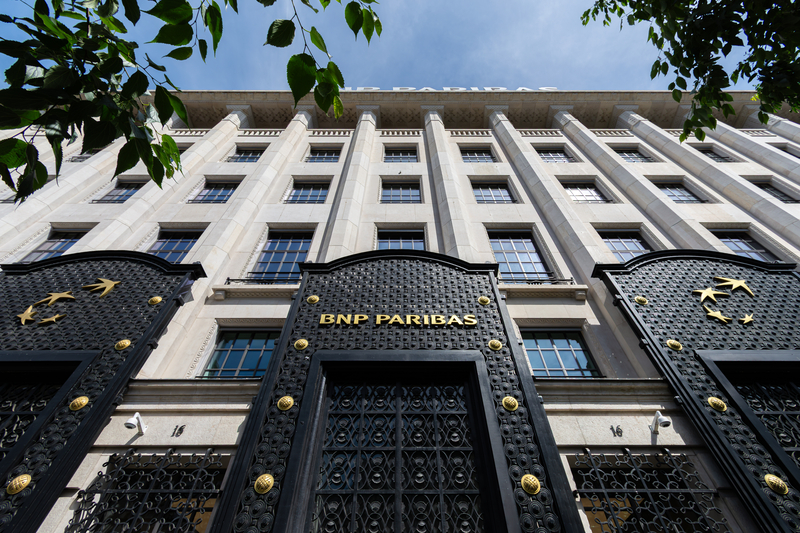
Major Shareholders and Ownership Structure
Shareholder Composition
BNP Paribas trades on major European exchanges with a diverse shareholder base that includes institutional investors, individual shareholders, and sovereign wealth funds. The bank's public ownership structure provides transparency and accountability while enabling access to capital markets.
Major institutional shareholders include domestic and international pension funds, insurance companies, and asset management firms. This institutional ownership base provides stability and long-term investment perspective that supports strategic planning and capital allocation decisions.
The shareholder base includes both European and international investors, reflecting the bank's global operations and market presence. Regular communication with shareholders ensures alignment between management decisions and stakeholder interests.
Corporate Governance Excellence
BNP Paribas's corporate governance structure emphasizes transparency, accountability, and stakeholder engagement. The bank's board of directors includes independent directors who provide oversight and strategic guidance while ensuring compliance with governance best practices.
Governance practices comply with international standards and regulatory requirements across the bank's operating jurisdictions. Regular audits, risk assessments, and compliance reviews ensure that BNP Paribas operates with integrity and maintains stakeholder trust.
The bank's commitment to responsible banking extends beyond financial performance to include environmental, social, and governance considerations. This comprehensive approach to corporate responsibility enhances the bank's reputation and stakeholder relationships.
Sustainability Initiatives and ESG Commitments
Environmental Responsibility
BNP Paribas has established ambitious environmental goals including carbon neutrality targets and sustainable finance commitments. The bank's environmental strategy encompasses both operational improvements and client-focused initiatives.
Sustainable finance operations include green bonds, environmental project financing, and ESG-focused investment products. These initiatives demonstrate the bank's commitment to supporting the transition to a sustainable economy while generating commercial returns.
The bank's environmental policies extend to its lending operations, with enhanced due diligence for projects with significant environmental impacts. This approach balances commercial objectives with environmental responsibility.
Social Impact and Community Engagement
BNP Paribas supports community development through various social initiatives and financial inclusion programs. The bank's social impact activities complement its commercial operations while addressing societal needs.
Employee development and diversity programs reflect the bank's commitment to creating an inclusive workplace that attracts and retains talented professionals. These initiatives enhance employee engagement while supporting business objectives.
The bank's social responsibility extends to its client relationships, with fair lending practices and transparent fee structures that build trust and long-term relationships.
Governance and Transparency
Corporate governance practices at BNP Paribas emphasize transparency, accountability, and stakeholder engagement. The bank's governance framework addresses the complexity of its global operations while ensuring effective oversight.
Regular reporting on ESG performance provides stakeholders with information about the bank's progress toward sustainability goals. This transparency demonstrates accountability and enables stakeholder engagement on important issues.
The bank's governance practices comply with international standards and regulatory requirements, ensuring that operations meet high standards of integrity and professionalism.
Comparison with European Banking Giants
Scale and Geographic Scope
BNP Paribas's position as Europe's largest bank by assets reflects its successful growth strategy and efficient operations. The bank's scale advantages enable it to compete effectively with global banking giants while maintaining strong regional positions.
Compared to peers like Deutsche Bank, Santander, and ING Group, BNP Paribas has achieved superior return on equity through disciplined capital allocation and operational efficiency. The bank's diversified revenue streams provide stability during economic downturns.
Geographic diversification distinguishes BNP Paribas from primarily domestic competitors. The bank's international presence provides growth opportunities and revenue diversification while requiring sophisticated risk management capabilities.
BNP Paribas: Shaping the Future of European Banking
BNP Paribas stands as a testament to the potential of strategic consolidation and disciplined execution in creating banking value. The institution's journey from two distinct French banks to Europe's largest financial institution demonstrates how thoughtful merger and consistent strategic focus can build sustainable competitive advantages.
Looking ahead, BNP Paribas's combination of scale, diversification, and financial strength positions it well to address the challenges facing European banking. The institution's commitment to sustainable finance, digital innovation, and operational excellence provides a foundation for continued leadership in an evolving financial landscape.
For students of banking and finance, BNP Paribas illustrates how European institutions can compete effectively with global banking giants through strategic focus, operational excellence, and disciplined risk management. The bank's evolution demonstrates that sustained success in banking requires continuous adaptation while maintaining core strengths and values that build long-term stakeholder relationships.